#künstliche intelligenz (72)

Seite 3 von 8

Word of the Year 2025: Slop

Merriam-Webster’s human editors have chosen slop as the 2025 Word of the Year. We define slop as “digital content of low quality that is produced usually in quantity by means of artificial intelligence.”

Like slime, sludge, and muck, slop has the wet sound of something you don’t want to touch. Slop oozes into everything.

Könnte für die ganze zweite Hälfte des Jahrzehnts ganz passend sein.

2025 Word of the Year: Slop | OpenGraph Preview Image
merriam-webster.com

2025 Word of the Year: Slop

Plus 'gerrymander', 'touch grass', 'performative', and other words that defined the year

USA schalten altes AKW wieder an – für künstliche Intelligenz

Das Kraftwerk Three Mile Island steht für den schlimmsten Reaktorunfall in der US-Geschichte. Doch bald soll ein Teil des stillgelegten AKWs wieder hochgefahren werden. Der Grund: der Energiebedarf von künstlicher Intelligenz. [Anm.: Link von mir ergänzt.]

Microsoft nimmt den dort erzeugten Strom für 20 Jahre ab.

Related: Wie teuer wäre eine Haftpflichtversicherung für ein Atomkraftwerk?

USA schalten altes AKW wieder an - für künstliche Intelligenz | OpenGraph Preview Image
tagesschau.de

USA schalten altes AKW wieder an - für künstliche Intelligenz

Das Kraftwerk Three Mile Island steht für den schlimmsten Reaktorunfall in der US-Geschichte. Doch bald soll ein Teil des stillgelegten AKWs wieder hochgefahren werden. Der Grund: der Energiebedarf von künstlicher Intelligenz. Von Sarah Schmidt.

AI CEO – Replace your Boss before they replace you

AI CEOs deliver instant executive decisions without the executive salary.

No bonus packages / No private jet needed / No mood swings / Ego-free

Super sinnvolle CEO-Weisheiten wie „Empathy, but only if it’s billable“ oder „Sleep is just unconscious time theft“ in einer Mini-Anwendung gebaut von Serious People, die diverse aktivistisch-kreative Kampagnen releasen, wie z.B Oilwell, das Klimakatastrophe mit Meditations-App kombiniert („Relax… it’s only the climate crisis“). (via @ennopark)

AI CEO – Replace Your Boss Before They Replace You | OpenGraph Preview Image
replaceyourboss.ai

AI CEO – Replace Your Boss Before They Replace You

Stop working for humans. AI CEO delivers algorithmic thought leadership, with instant decisions, and zero ego. Replace your boss before they replace you.

„Pay me to send you less!“

Ein simple Box auf der Webite von Simon Willison mit dem Titel „Monthly briefing“. Darunter steht: „Sponsor me for $10/month and get a curated email digest of the month’s most important LLM developments. Pay me to send you less!“ Unten befindet sich ein violetter Button mit der Aufschrift „Sponsor & subscribe“.

Simon Willison, der das unauf­geregte, täglich aktuali­sierte Must-Read-Blog für alles um Artificial Intelligence führt, lässt sich mit einem kosten­pflich­tigen Abo seines nur einmal pro Monat erscheinenden Newsletters unterstützen, in dem er seine letzten vier Wochen an Blogposts nochmal zusammengefasst:

I write a lot of stuff. If you like you can pay me to send you less. At the end of every month I send out a much shorter newsletter to anyone who sponsors me for $10 or more on GitHub. It’s intended to be a ten minute read that catches you up on the most important developments from the past month in LLMs and my other projects and research.

Clever. Hier als Beispiel die nun frei zugängliche Ausgabe von September.

Why 2025 is the single most pivotal year in our lifetime

Vorschaubild zum Video. Aktivieren, um das Video zu laden und abzuspielen. 
(YouTube Direktlink)

Ein interessantes, wenn auch etwas pathetisches Video, in dem der Futurist Peter Leyden argumentiert, dass wir uns durch die gleichzeitigen, rasanten Entwicklungen in Künstlicher Intelligenz, sauberer Energie und Biotechnologie an einem historischen Wendepunkt befinden. „One of the rare moments in American and global history when everything gets reimagined at once“.

Leyden, Co-Autor des 1997er und überraschend zutreffenden Wired-Artikels „The Long Boom1, begründet das mit einem Blick in die Vergangenheit, wonach etwa alle 80 Jahre ein kompletter gesellschaftlicher und wirtschaftlicher Zyklus endet und ein neuer beginnt – zuletzt um 1945 und jetzt, so Leyden, wieder.

  1. Internet-Archive-Link von letztem Jahr, weil der Artikel dieser Tage ungut abschnitten wird. []

OpenAI acquires Apple Shortcuts Creators to bring deep Mac Integration to ChatGPT

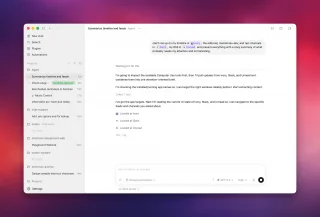
Die Macher der App Workflow, die 2017 nach Aquihire die Grundlage für die Shortcuts-App (deutsch: Kurzbefehle) von Apple wurde, haben sich – nachdem sie ihre Apple-Zeit abgesessen haben – zuletzt wieder mit „Software Applications Incorporated“ selbständig gemacht und den hier auch gefeaturedten AI-Layer „Sky“ für macOS entwickelt, der bald erscheinen und AI-Funktionen systemweit und App-übergreifend bereitstellen soll.

Ich schrieb dazu im Mai, dass es „mich nicht wundern würde, wenn eine dieser Firmen [OpenAI, Google, Microsoft oder insbesondere Apple] (wieder) bei diesem Team zugreift“ und das ist nun geschehen. OpenAI war’s, die gerade im Rahmen der Veröffentlichung ihres aktuell Mac-exklusiven Chromium-Forks ChatGPT Atlas überall erzählen, „ChatGPT [is] evolving to become the operating system for your life“.

Für Menschen, die ein Apple-Life führen, könnte das seit heute ein bisschen mehr wahr werden.

OpenAI Acquires Apple Shortcuts Creators to Bring Deep Mac Integration to ChatGPT | OpenGraph Preview Image
macrumors.com

OpenAI Acquires Apple Shortcuts Creators to Bring Deep Mac Integration to ChatGPT

OpenAI today said that it has acquired Software Applications Incorporated and its AI app, Sky. Software Applications Incorporated and Sky were...

Tim Berners-Lee: Why I gave the world wide web away for free

[…] We need a Cern-like not-for-profit body driving forward international AI research.

[…] If we are able to muster it, we have the chance to restore the web as a tool for collaboration, creativity and compassion across cultural borders. We can re-empower individuals, and take the web back. It’s not too late.

Da die AI-Entwicklung in China und den USA zu sehr von „for profit“ & „for propaganda“ geprägt wird, könnte, sollte und müsste das eine europäische Initiative sein.

Why I gave the world wide web away for free | Tim Berners-Lee | OpenGraph Preview Image
theguardian.com

Why I gave the world wide web away for free | Tim Berners-Lee

My vision was based on sharing, not exploitation – and here’s why it’s still worth fighting for

Adding a feature because ChatGPT incorrectly thinks it exists

Schöne Anekdote vom vielleicht ersten Software-Feature, das – von Menschen – nur deswegen entwickelt wurde, weil ChatGPT behauptet hat, dass es das gibt:

Turns out ChatGPT is telling people to go to Soundslice, create an account and import ASCII tab in order to hear the audio playback. […]

Problem is, we didn’t actually have that feature. We’ve never supported ASCII tab; ChatGPT was outright lying to people. And making us look bad in the process, setting false expectations about our service.

To my knowledge, this is the first case of a company developing a feature because ChatGPT is incorrectly telling people it exists. (Yay?)

Adding a feature because ChatGPT incorrectly thinks it exists | Holovaty.com | OpenGraph Preview Image
holovaty.com

Adding a feature because ChatGPT incorrectly thinks it exists | Holovaty.com

CC Signals: A New Social Contract for the Age of AI

Creative Commons (CC), das Non-Profit hinter der gleichnamigen Lizenz, die auch beim hiesigen Content zum Einsatz kommt (und zwar CC BY-NC-ND), hat sich eine neue Lizenz ausgedacht, die definiert inwieweit die eigenen Inhalte für AI-Training genutzt werden dürfen:

CC signals are a proposed framework to help content stewards express how they want their works used in AI training—emphasizing reciprocity, recognition, and sustainability in machine reuse. They aim to preserve open knowledge by encouraging responsible AI behavior without limiting innovation.

Es soll dabei zwischen vier Signals/Stufen unterschieden werden können (wobei „Credit“ bei allen Stufen enthalten ist). Hier die etwas verständlichere Zusammenfassung von Manton Reece:

credit: You want credit back when your content is cited by AI.

direct contribution: You want some kind of payment when your content is used.

ecosystem: You want the broader ecosystem around your content to be supported by the AI company.

open: You want your content to be used only for open weight AI models.

Klingt alles sehr interessant. Bleibt spannend zu sehen, ob und wie das (oder sowas) implementiert wird.

CC Signals: A New Social Contract for the Age of AI - Creative Commons | OpenGraph Preview Image
creativecommons.org

CC Signals: A New Social Contract for the Age of AI - Creative Commons

TL;DR – What are CC signals? CC signals are a proposed framework to help content stewards express how they want their works used in AI training—emphasizing reciprocity, recognition, and sustainability in machine reuse. They aim to preserve open knowledge by encouraging responsible AI behavior...