Software is „done“ in the same way that the dishes are „done“. Software, like clean dishes, is only done if you never plan to use it again.
– Dave Cheney, seineszeichens obviously Entwickler auf Twitter.

Das Weblog von Stefan Grund, der im Netz als @eay unterwegs ist und hier seit 2003 über Medien, Popkultur und Technologie schreibt. Mehr »
Software is „done“ in the same way that the dishes are „done“. Software, like clean dishes, is only done if you never plan to use it again.
– Dave Cheney, seineszeichens obviously Entwickler auf Twitter.
No code is the best way to write secure and reliable applications. Write nothing; deploy nowhere.
It’s funny, ‘cause it’s true. (via Jens)
The best way to write secure and reliable applications. Write nothing; deploy nowhere. - kelseyhightower/nocode

In unserer beliebten Reihe der JavaScript-Nachbauten von Retro-Software folgt heute nach Winamp und MS Paint ein Spielklassiker, mit dem ich damals unendlich viel Zeit verbrachte: SimCity 2000, nachgebaut mit JavaScript, der HTML5 Canvas API1, SQLite und eingepackt mit Electron.
Update, 24.08.2018: Das Repo steht nicht mehr zur Verfügung → DMCA-Takedown-Notice.
OpenSC2K - An Open Source remake of Sim City 2000 by Maxis - nicholas-ochoa/OpenSC2K
Short Trip is the first instalment in a collection of interactive illustrations created for the web. It has been created as a study into capturing the essence of graphite on paper within a digital context, and to learn more about web-based graphics technologies. Short Trip will run on most devices supporting WebGL, including mobile devices.
Sehr tolle und beeindruckende Arbeit von Alexander Perrin. (via Waxy)
Interesting development in the WordPress community: After creating it’s modern, React-based Calypso interface in 2015, Automattic and the WordPress team are now parting ways with React, because of a patent issue in it’s license. They are going to rewrite their upcoming Gutenberg editor with a new, yet to be chosen JavaScript framework, which then should become the new standard for WordPress.
While Preact, a lightweight React alternative with the same API, would be the obvious replacement, a majority of the community prefers a switch to Vue.js. An opinion I highly support. I had the opportunity to learn and work with Vue.js in my day job and for shortfil.ms 2.0 in the last couple of months and I’m hooked. I think it’s right up WordPress‘ alley, because it’s an easy to learn, yet powerful framework and could be a perfectly fitting foundation for modern front-end development with WordPress in the years to come.
TL;DR: +1 for Vue.js
Chris Coyier hat sich ein paar Gedanken zur Zukunft des Frontends gemacht, die ich alle so unterschreiben kann.
I was asked to do a little session on this the other day. I'd say I'm underqualified to answer the question, as is any single person. If you really needed
Brent Simmons und Manton Reece haben einen neuen Feed-Standard spezifiziert, der die Arbeit mit diversen News-, Blog- und Whatever-Feeds erleichtern soll, indem auf JSON anstelle von XML gesetzt wird, das bei RSS und Atom zum Einsatz kommt.
Ich begrüße das sehr. Die Arbeit mit JSON ist mein täglich Brot, macht Spaß und ist einfach. Die definierten Standards machen Sinn, dennoch sind die Feeds aber wunderbar flexibel – unbekannte Keys werden einfach ignoriert. Selbstredend habe ich eay.cc soeben auch mit einem eigenen JSON Feed ausgestattet, dessen Items ich direkt mit _type um den jeweiligen Post-Typ erweitert habe. Linkposts können – external_url sei Dank! – endlich sauber (und seitenübergreifend gleich) ausgegeben werden. Für die anderen Post-Typen passe ich die Ausgabe später noch weiter an.
Zusammen mit der generellen Feed-Funktionalität von WordPress (vgl. hier) ein guter, weiterer Schritt zur einfacheren Weiterverwurstelung von Bloginhalten.
Update, 26.05.: Ich habe den JSON Feed heute noch um Tags und Short-URLs erweitert. Außerdem bekommen die Status-Posts nun neben dem HTML einen zusätzlichen „Text only“-String, der das syndizieren zu diversen Microblogging-Diensten vereinfachen sollte. Das gehe ich als nächstes an.

by Brent Simmons and Manton Reece There is a new version available: JSON Feed Version 1.1 The JSON Feed format is a pragmatic syndication format, like RSS and Atom, but with one big difference: it’s JSON instead of XML. For most developers, JSON is far easier to read and write than XML. Develop...
Mach’s wie Mark Zuckerberg und füge überall Stories hinzu.
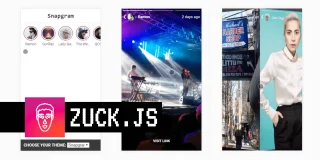
A javascript library that lets you add stories EVERYWHERE.
Here’s a checklist of small-ish tasks you’ll want to cross off before you formally announce your new thing (app, website, physical product, an art of some sort).
Helpful little list by Neven Mrgan, who launched Stagehand recently.
Shaming sites with dumb password rules.
Als einzige deutsche Webseite darf die Sparkasse mit ihrem merkwürdigen Online-Banking-PIN-System natürlich nicht fehlen. (via @horn)